


Uniquely, Fully, Enough: A Powerful Guide for Parents Navigating Special Needs and Finding Strength Along the Way


There are moments in life when the path you imagined quietly shifts—and nothing looks the way you thought it would. At Best Ever You, we talk often about navigating change, embracing what is, and learning how to show up fully in the life you’ve been given. But when you’re raising a child with special needs, that journey becomes something deeper. More personal. More complex. And at times, incredibly overwhelming.
It’s a path that asks more of you than you ever expected.
More patience.
More advocacy.
More emotional resilience.
And often, it comes with questions no one prepares you for.
What does this mean for my child? Will I be able to do this? Where do I even begin?
In Uniquely, Fully, Enough, special education advocate and mother Vicki Christensen offers something many parents are searching for but rarely find: honesty without fear, guidance without judgment, and reassurance without unrealistic expectations.
This is not a story about getting everything right.It’s a story about learning how to keep going.
Through her own journey raising her son Luke, Vicki brings together lived experience and practical support—helping parents move from overwhelm to understanding, from isolation to connection, and from uncertainty to quiet strength.
Because sometimes, the most powerful thing a parent can hear is this:
You are not alone. And you are already more capable than you think.
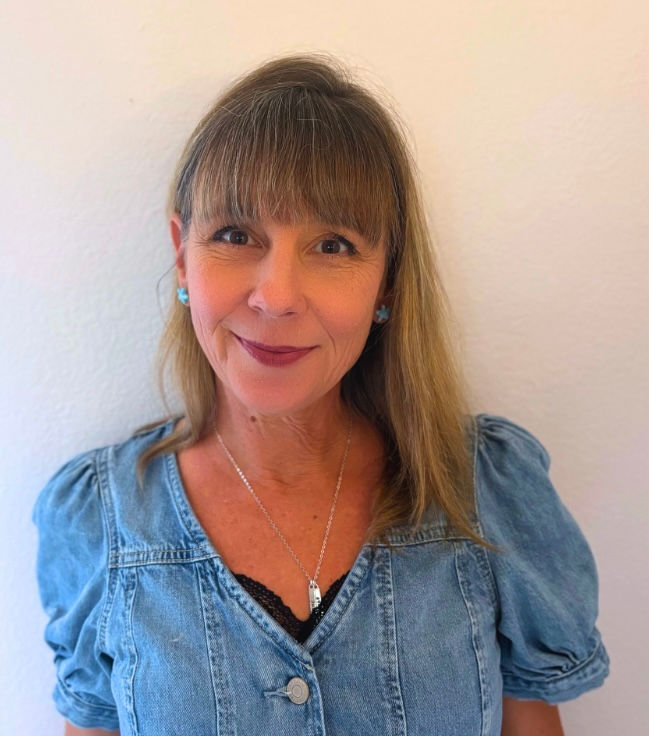
What inspired you to write Uniquely, Fully, Enough, and what did you most want parents to feel when they read it?
My journey with Luke is what inspired the book. What started as uncertainty and fear slowly became a path of growth, perspective, and advocacy. I wrote Uniquely, Fully, Enough because I remember how isolating those early days felt and I wanted other parents to feel less alone. More than anything, I want parents to feel seen, understood, and reassured that they are enough, even on the hardest days.
You describe your journey as both unexpected and life-changing. What was one of the earliest moments that shifted your perspective as a parent? One of the earliest shifts came when I realized that the path I had imagined wasn’t the one we were on and that didn’t mean something was wrong, just different. There was a moment where I stopped asking, “Why is this happening?” and started asking, “What does Luke need from me right now?” That shift changed everything.
Many parents remember the moment of diagnosis vividly. How did you process that experience, and how did it shape your path forward? The diagnosis brought a mix of emotions, grief, confusion, fear, and even guilt. It felt like everything changed in an instant and because Luke’s chromosome disorder is so rare, there was virtually no information.. But over time, I realized the diagnosis didn’t change who Luke was, it just gave us a better understanding of how to support him. That realization helped me move from fear into action and ultimately into advocacy.
Your book speaks honestly about the emotional weight of special needs parenting. What are some of the feelings parents may struggle to talk about openly? There are so many feelings parents don’t feel safe saying out loud: grief for the life they imagined, exhaustion, resentment, isolation, even moments of doubt. And alongside that, there’s deep love and fierce protectiveness. Those emotions can coexist, but many parents feel guilty admitting the harder ones.
How can parents begin to move from overwhelm into a place of steadiness, even when nothing feels certain? It starts with narrowing your focus. Instead of trying to solve everything at once, focus on the next right step. Find one support, one piece of information, one small win. Over time, those small steps create steadiness. And just as importantly, giving yourself permission not to have all the answers right away.
You’ve become a strong advocate for families. What does effective advocacy look like, especially for parents who are just beginning this journey? Effective advocacy doesn’t mean knowing everything, it means showing up, asking questions, and trusting your instincts as a parent. It’s about collaboration when possible, but also knowing when to stand firm. For new parents, advocacy starts with
learning your child’s needs and realizing your voice matters in every room you walk into.
The IEP process can feel intimidating. What are a few key things you wish every parent knew before walking into their first meeting? I wish every parent knew that they are an equal member of the team. You’re not there to be told what will happen; you’re there to help shape the plan. It’s okay to ask for the IEP a few dyas prior to the meeting, to ask questions, to take time to review things, and even say, “I’m not comfortable signing this today.” Preparation and confidence go a long way.
What are some of the most common challenges families face within school systems, and how can they navigate them with more confidence? Some common challenges include lack of communication, limited resources, and feeling like decisions are already made before the meeting begins. Parents can navigate this by documenting everything, staying organized, and going into meetings with clear priorities. Confidence grows with knowledge and preparation.
Your book blends personal story with practical strategies. What are a few tools or approaches that have made the biggest difference in your own family’s life? Consistency, clear communication, finding my local village, and building the right support team have made a huge difference. I’ve also learned the importance of understanding systems, whether medical or educational, so I can advocate effectively. And honestly, mindset has been just as important as strategy.
How can parents care for their own emotional well-being while also supporting their child’s needs? Parents have to recognize that their well-being matters too. Even small moments of rest, connection, or support can make a difference. You can’t pour from an empty cup, and taking care of yourself isn’t selfish, it’s necessary. I touch on this in my book, self care = survival care.
Special needs parenting can impact relationships. What have you learned about maintaining connection with partners, family, and support systems? Again, communication is everything. This journey can be overwhelming, and people process it differently. Giving each other space while staying connected is important. I’ve also learned that not everyone will understand, and that’s okay. Finding the people who do makes all the difference.
As your son has grown, how has your definition of success or progress evolved over time? Success used to look like milestones and comparisons. Now it looks like growth on Luke’s terms; progress that reflects who he is, not what others expect. I’ve learned to celebrate things I might have overlooked before such as his love of helping others and
how despite his speech and language difficulties, he always gets his point across! Luke is fully present all of the time and he is my constant reminder to be present as well.
Many parents carry expectations of what life “should” look like. How can they begin to release those expectations and embrace what is? It’s a process. It starts with acknowledging the expectations and giving yourself permission to grieve them. Over time, you begin to see the beauty in what is, not as a replacement, but as something meaningful in its own right.
Through your work with Blue Glasses Advocacy, you support and connect families. How important is community in this journey, and how can parents find it? Community is everything. It turns isolation into connection and confusion into shared understanding. Parents can find community through local groups, online spaces, and organizations, but it often starts with just reaching out to teachers, therapists, other parents, etc. and being willing to connect. I co-host 2 all-inclusive community events each year with a local non-profit organization. Check out Best Buddies, The ARC, or other organizations for a list of community events.
What does “uniquely, fully, enough” mean to you today, and what message would you most want to leave with parents who may be feeling stretched or uncertain? To me, it means that our children are fully who they are, exactly as they are, and that we, as parents, are enough for them. We don’t have to be perfect or have all the answers. The message I’d want to leave is this: you are doing more than you think, and your presence, your love, and your persistence matter deeply.
What makes this story so powerful is not just what Vicki has been through, but how she has chosen to move forward.
Not with perfection.
Not with all the answers.
But with presence, persistence, and a willingness to keep showing up.
And that is where real strength lives.
At Best Ever You, we believe that growth doesn’t come from having a perfect plan. It comes from taking the next step, even when the path isn’t clear. It comes from learning to trust yourself in moments of uncertainty. And it comes from recognizing that love, in its truest form, is often found in the effort, not the outcome.
If you are a parent walking a similar path, let this be your reminder:
You don’t have to have it all figured out. You don’t have to carry it perfectly. You just have to keep showing up.
Pause long enough to breathe. Give yourself grace in the moments that feel heavy. Choose to trust that what you are doing matters—even on the days it doesn’t feel like enough.
Because it is.
Your presence matters.
Your advocacy matters.
Your love matters.
And in the middle of everything—every appointment, every meeting, every unknown—you are still building something meaningful, one moment at a time.
And when you grow, the world grows with you.


Comments