


Colorectal Cancer Is Rising in Younger Adults: What You Need to Know Now

There are some conversations that feel important—and this is one of them.
At Best Ever You, we talk often about awareness, self-advocacy, and listening to your body. But sometimes, those conversations take on a deeper urgency, especially when it comes to our health.
Colorectal cancer is no longer something that only affects older adults. More and more cases are being diagnosed in people in their 20s, 30s, and 40s—often later than they should be. And one of the biggest challenges is that many of the early warning signs are easy to dismiss.
That’s why this conversation matters.
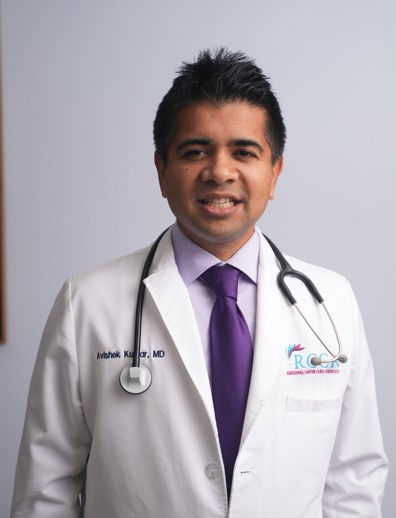
Dr. Avishek Kumar brings both expertise and clarity to a topic that can feel overwhelming. In this interview, he breaks down what’s changing, what to watch for, and how each of us can take a more proactive role in our health.
Because awareness isn’t about fear—it’s about giving yourself the information you need to take care of your life.
What’s changing right now with colorectal cancer, and why are we seeing more cases in younger people?
What’s changing is that colorectal cancer is no longer something we can think of as only affecting older adults. We are seeing more cases in people in their 20s, 30s, and 40s, and too often they are diagnosed later than they should be. We still do not think there is one single cause. It is likely a combination of diet, obesity, sedentary lifestyle, metabolic disease, and probably changes in the gut microbiome. The big takeaway is simple: being young does not make someone immune.
You mentioned that 80% of cases are sporadic. Can you explain what that means and why relying on family history can give people a false sense of security?
When we say most cases are sporadic, we mean they happen without a clear inherited syndrome or strong family pattern. In other words, the majority of people diagnosed with colorectal cancer were not handed a warning label in advance. That is why family history can be misleading. A person may say, “No one in my family had this, so I must be fine.” Unfortunately, that is not how it works. A clean family history does not mean zero risk.
Many people are using at-home stool tests and feeling reassured by negative results. What’s important for people to understand about the limitations of these tests?
At-home stool tests can be useful screening tools in the right situation, but they are not a substitute for a colonoscopy. A negative result should never be interpreted as, “I definitely do not have cancer.” These tests can miss cancers, and they can certainly miss precancerous polyps. Most importantly, they are not meant to explain symptoms. If someone has rectal bleeding, unexplained weight loss, persistent abdominal pain, iron deficiency, or a real change in bowel habits, that needs medical evaluation, not false reassurance from a home test.
What are the most commonly overlooked symptoms that people—and even doctors—might dismiss, especially in younger patients?
The symptoms that get brushed aside most often are rectal bleeding, fatigue from iron deficiency anemia, a persistent change in bowel habits, abdominal discomfort, and unexplained weight loss. In younger adults, these symptoms are often blamed on hemorrhoids, stress, IBS, diet, or just being busy and run down. Sometimes that is true. But sometimes it is not. The danger is when symptoms keep recurring and nobody steps back to ask whether something more serious could be going on.
For someone listening who might be unsure, what are the red flags that should never be ignored when it comes to colorectal cancer?
Blood in the stool should never be ignored. Neither should a lasting change in bowel habits, persistent constipation or diarrhea, unexplained weight loss, worsening fatigue, abdominal pain that keeps coming back, or iron deficiency anemia. Any one of these symptoms can have a benign explanation, but patterns matter. If something is persistent, progressive, or just does not fit, it deserves attention.
You talk about lifestyle playing a major role in risk. What are some of the most important lifestyle factors people should be paying attention to right now?
The biggest ones are diet, obesity, inactivity, smoking, and heavy alcohol use. Diets high in ultra-processed foods and processed meats may increase risk, while diets richer in fiber, fruits, vegetables, and whole foods appear to be more protective. We are also learning more about the role of metabolic health. This is not about blaming patients. It is about recognizing that the everyday choices we normalize may shape cancer risk more than people realize.
Why do you think symptoms like abdominal pain, changes in bowel habits, or unexplained weight loss are often dismissed in younger individuals?
Because in younger people, the first assumption is usually that it is something benign, and often it is. That is what makes this tricky. Patients do not think cancer is likely, and doctors do not think cancer is likely. But “less likely” is not the same as “impossible.” The problem happens when age becomes the reason to stop looking instead of just one factor in the overall picture.
What would you say to someone who feels “too young” to be concerned about colorectal cancer?
I would say that colorectal cancer does not read birth certificates. You do not need to panic, but you do need to respect your symptoms. If your body is sending repeated warning signs, listen. One of the most dangerous myths in medicine right now is, “I’m too young for this.”
From a prevention standpoint, what are the most powerful steps people can take today to reduce their risk?
The most powerful steps are the basics we often underestimate: maintain a healthy weight, stay physically active, avoid smoking, limit alcohol, and improve the quality of your diet. Get screened when you are eligible. And just as importantly, do not ignore symptoms simply because you are younger than the routine screening age. Prevention is not just about a future colonoscopy. It is also about taking today’s warning signs seriously.
If there’s one message you want people to take away during National Cancer Control Month, what would it be?
The best cancer story is the one we prevent. When prevention is not possible, the next best story is catching it earlier rather than later. Do not let age, embarrassment, or false reassurance keep you from getting checked when something does not feel right.
How can people better advocate for themselves if they feel something isn’t right but aren’t being taken seriously?
Be persistent and be specific. Tell your doctor what is happening, how long it has been happening, and whether it is getting worse. Do not be afraid to ask direct questions. Ask what the next step should be if symptoms continue. And if you still feel dismissed, getting a second opinion is reasonable. Self advocacy is not overreacting; sometimes it is exactly what leads to the right diagnosis.
What stands out most in this conversation is not just the information—it’s the reminder.
A reminder to listen.
A reminder to trust yourself.
A reminder that you know your body better than anyone else.
At Best Ever You, we believe that awareness is one of the most powerful forms of self-care. Not anxiety. Not overreaction. Just the willingness to notice when something feels off—and to take that seriously.
You don’t need to live in fear.
But you do need to stay aware.
Pause long enough to check in with yourself.
Breathe and create space to respond.
Choose to take action when something doesn’t feel right.
The best outcomes often begin with the simplest decision: to pay attention.
Because when you advocate for your health, you’re not just protecting your future—you’re honoring your life.
And when you grow, the world grows with you.
About Dr. Avishek Kumar:

Dr. Avishek Kumar is a board-certified medical oncologist based in Edison, NJ (NYC metro). He focuses on modern, evidence-based cancer treatment, second opinions, and infusion therapies.
He also serves as a Lieutenant Colonel in the U.S. Air Force Reserve as a flight surgeon. He has deployed overseas and regularly flies on fighter aircraft in support of operational missions, bringing a high-performance, mission-driven mindset to medicine and leadership.
Dr. Kumar writes and speaks on cancer care policy, screening, and treatment advances, and has been published in NJ.com and MedPage Today. He’s comfortable translating complex oncology topics into clear, practical information for the public.


Comments