


Maybe You Don’t Need to Fix Yourself

What if personal growth isn’t about becoming someone better, but becoming more fully yourself?

I have spent nearly two decades in the personal growth space, and I think we need to talk about something.
We may have accidentally convinced people that they are never enough.
There is always another habit to master, morning routine to perfect, boundary to set, book to read, podcast to hear, goal to reach, relationship to improve, body to change, mindset to fix, and version of ourselves we are supposed to become. We are told to wake up earlier, work harder, think more positively, manifest more clearly, exercise more consistently, drink more water, meditate longer, declutter the house, heal the past, optimize the future, find our purpose, and somehow remember to be present while doing all of it.
I’m exhausted just writing that.
At some point, personal growth can start feeling remarkably similar to personal criticism. I think we need to be careful about that. I believe deeply in personal growth. I have built much of my life's work around it. I write books about change, success, peace, gratitude, and becoming your best self. I coach people. I speak about these subjects. I have interviewed hundreds of people about how they have navigated their lives. I have spent years thinking about what helps us change and what keeps us stuck.
However, I don't believe you are a problem that needs to be solved.
There is a difference.
You can have things you want to change without believing there is something fundamentally wrong with you. You can want a different life without despising the life you have. You can have goals without making your worth dependent on reaching them. You can acknowledge your mistakes without turning yourself into one.
And you can grow without spending your entire life trying to become someone else.
I Didn’t Call It Better Than You
When I founded Best Ever You in 2008, I didn't call it Better Than You.
I didn't call it Perfect You.
I didn't call it Better Than Everyone Else.
I didn't call it New and Improved You, Fix Yourself, Never Make Another Mistake, or Finally Get Your Life Together.
And thank goodness I didn't call it Best at Everything, because I would have disqualified myself from my own company almost immediately.
I called it Best Ever You.
There's a difference.

Your best self isn't the person who finally gets everything right. It isn't the thinnest, richest, calmest, most productive, most healed, most successful, perfectly hydrated version of you who wakes up at 5 a.m., meditates, journals, exercises, drinks something green, answers every email, never loses her patience, and somehow remembers everyone's birthday.
Your best self is still you.
That matters to me because I think personal growth has become tangled up with comparison. We see someone's morning routine and wonder what's wrong with ours. We see someone's career announcement and question our own progress. We see someone celebrating an anniversary and examine our relationship. Someone loses twenty pounds, buys a house, sells a company, writes a bestseller, gets promoted, runs a marathon, goes on a fabulous vacation, or announces that they have finally found their purpose, and suddenly we are evaluating our own lives.
We don't even have to know the person anymore. Our phones are happy to provide us with an endless supply of people against whom we can measure ourselves.
And the finish line keeps moving.
There will always be someone with more followers, more money, more recognition, more discipline, a bigger house, a better title, a younger face, a flatter stomach, a longer marriage, a more impressive résumé, or whatever else you've decided would prove you're doing life correctly.
If your definition of growth requires you to continually become more like somebody else, you may spend your whole life overlooking yourself.
You Are a Person, Not a Project
There is a difference between growing because you believe something is possible for you and changing because you've decided something is wrong with you.
There is a difference between saying, I want more for my life, and saying, I will finally be worthy when...
There is a difference between taking responsibility for yourself and spending your entire life auditing yourself.
I see this in coaching. People come in with a list of things they need to fix:
Their career.
Their weight.
Their marriage.
Their confidence.
Their habits.
Their productivity.
Their finances.
Their boundaries.
Their ability to say no.
Their ability to say yes.
Their past.
Their future.
Sometimes there are absolutely things that need attention. I'm not interested in pretending otherwise. There are patterns we need to change. Relationships that need work. Decisions we need to make. Apologies we need to offer. Health we need to take seriously. Dreams we have neglected. Behaviors that aren't serving us or the people around us.
But sometimes, before we add one more thing to the list, I want to ask:
What if you are not as far from yourself as you think you are?
Maybe you don't need an entirely new you. Maybe you need to hear yourself again.
You can want to change without hating who you are today.
The tricky part is recognizing when we've crossed that line. When does the desire to grow stop coming from curiosity, possibility, or even love for ourselves and start coming from the nagging belief that who we are right now isn't enough? I don't think most of us consciously decide to live that way. It happens gradually, and sometimes it can even look like we're doing all the right things.
Five Signs Personal Growth Has Turned Into Personal Pressure
I’ve been doing this work for a long time, and I’m certainly not immune to any of it. I’ve caught myself moving the finish line after reaching a goal, comparing my life or work to someone else’s, focusing on what I haven’t done instead of what I have, or thinking I should somehow have more figured out by now. I see versions of the same thing in coaching conversations and in the hundreds of conversations I’ve had with people over the years.
That’s why I think it’s worth paying attention to the point where wanting to grow starts becoming pressure to constantly improve. It can happen so gradually that we don’t even notice it. From the outside, it may look like ambition, discipline, productivity, or simply having high standards. On the inside, though, it can start to feel like nothing we do is quite enough.
I’ve learned to pay attention when that shift happens. Here are five signs that personal growth may have quietly turned into personal pressure.
1. Nothing You Accomplish Feels Like Enough
You reach the goal, but instead of enjoying it, you immediately move the finish line.
You get the promotion and think about the next title. You lose the weight and focus on the remaining five pounds. You finish the project and notice what you could have done better. You reach a milestone and, within minutes, you're comparing it with somebody else's.
Ambition isn't the problem. I love ambition. I love goals. I love watching people discover what they are capable of.
But if every accomplishment immediately becomes evidence that you should have accomplished more, that's not growth. That's an inability to let yourself arrive anywhere.
Success needs moments when we actually allow ourselves to say, I did that.
Not forever. Just long enough to experience our own lives while they're happening.
2. Your Inner Voice Sounds More Like a Critic Than a Coach
Pay attention to how you speak to yourself.
Would you coach another person that way? Would you speak to your child that way? Your best friend? Someone you genuinely wanted to help?
There is a strange idea that being hard on ourselves will somehow produce our best selves. Sometimes it produces the opposite. We become afraid of mistakes. We procrastinate because we don't want to fail. We don't try because we don't want more evidence against ourselves.
I often say, “When you don't see eye-to-eye, see heart-to-heart.” I believe that applies to the relationship we have with ourselves, too.
You won't always agree with your own choices. You won't always like how you handled something. You won't always understand the person you used to be. But you can hold yourself accountable without withholding compassion.
Compassion is not letting yourself off the hook.
Sometimes compassion is what finally gives you enough safety to change.

3. You Are Constantly Comparing Your Life to Someone Else’s
Comparison is one of the fastest ways to turn personal growth into personal dissatisfaction. But I think it can do something else that we don't talk about enough.
Comparison can make us terrible collaborators.
I’ve worked with people throughout my career in business, books, media, organizations, partnerships, and creative projects, and collaboration can be one of the most rewarding ways to work. I love what can happen when people bring different strengths, experiences, perspectives, and ideas to the same table. The right collaboration can create something none of us could have created alone.
But collaboration requires a certain amount of security in who you are and what you bring.
If I'm constantly comparing myself to you, it becomes much harder for me to genuinely collaborate with you. Your success can start to feel like my failure. Your great idea can feel threatening instead of exciting. Your recognition can make me wonder why I wasn't recognized. I can start keeping score.
Who did more?
Who got more credit?
Whose name came first?
Who got thanked?
Who got invited?
Who got noticed?
That's not collaboration anymore. That's competition wearing a collaboration nametag. I've learned that you can feel the difference.
Healthy collaboration allows me to say, You're really good at that, and I'm really good at this. Let's see what happens when we put those things together. I don't need to diminish your strengths to feel confident in mine. I don't need every idea to be mine. I don't need all the attention. And I don't need your success to somehow make me less successful.
This is where knowing yourself becomes incredibly important.
I wrote The Success Guidebook because I believe one of the most important things we can do is define success for ourselves. Because if I haven't decided that success means to me, I am much more likely to use your life as my measuring stick.
There are goals you may have spent years pursuing only to discover they aren't actually yours. There are versions of success that look wonderful from the outside and feel empty when you're the one living them.
Ask yourself:
Do I actually want this, or do I want what I think having it would say about me?
And when you're working with someone else, I'd add another question:
Can I celebrate what someone else brings to the table without believing it takes something away from what I bring?
That's a question worth sitting with.
The best collaborations aren't built by people trying to outshine one another. They're built by people secure enough to bring their strengths, generous enough to recognize someone else's, and wise enough to understand that someone else shining does not require you to dim.
Your life does not have to impress someone else to be meaningful to you. And someone else's success does not make yours smaller.
There is room at the table for both.
4. You Keep Waiting to Like Yourself
This one concerns me the most because it can steal years from us. We can become so convinced that a better version of ourselves is waiting somewhere in the future that we withhold acceptance from the person we are right now. We treat self-worth almost like a reward we'll finally be allowed to collect once we've checked enough boxes, corrected enough flaws, or gotten enough of our life figured out.
I hear it in the way people talk about themselves, and I catch it in myself, too. There is often an invisible finish line attached to how we think we are allowed to feel about ourselves:
I'll feel better about myself when I lose the weight.
When I make more money.
When I get the job.
When I find the relationship.
When the kids are doing better.
When I finish the degree.
When I get organized.
When I finally become the person I know I could be.
And so we make liking ourselves conditional.
The problem is that there is always another condition available.
I've spent years writing about change, and I absolutely believe people can change their lives. But I don't believe we have to despise ourselves into transformation.
Change can come from love, too.
You can take better care of your body because you value it. You can leave something unhealthy because you value your life. You can pursue the opportunity because you believe in your potential. You can set the boundary because your peace matters. You can apologize because your relationships matter.
You don't have to hate who you are to become more of who you want to be.
5. You Have Forgotten How to Live While You’re Busy Improving Your Life
This may be the sneakiest one.
You can become so focused on what’s next that you miss what’s already here. The coffee with your spouse. The dog sleeping beside you. Your child's phone call. The friend who makes you laugh. Dinner around a table. A walk outside. The ridiculous family group text. Someone you love sitting right there in the room.
None of it may seem particularly extraordinary while it’s happening. It’s just Tuesday. It’s just dinner. It’s just another phone call or cup of coffee.
Until one day, it isn’t.
I think that’s one of the great challenges of being human. We are remarkably good at recognizing the value of something once it has changed or disappeared. The harder practice is recognizing its value while we still have it.
That’s why I say so often, “We are not entitled to time.”
Not to make us afraid of losing what we love, but to remind us to be here for it while it’s still here.
So What Does Healthy Growth Look Like?

For me, healthy personal growth begins with awareness rather than criticism.
This is part of what Dr. Katie Eastman and I were getting at all those years ago when we wrote Percolate: Let Your Best Self Filter Through. We weren't suggesting that people throw themselves away and start over.
The idea was to let your best self filter through.
There are things we accumulate that can obscure who we are. Fear. Other people's expectations. Old beliefs. Comparison. Resentment. Habits. Hurt. The need for approval. Definitions of success we inherited rather than chose.
Sometimes growth is:
adding something.
letting something go.
finally saying no.
finally saying yes.
working harder.
resting.
forgiving another person.
forgiving yourself.
Sometimes growth is realizing you don't need to turn every part of yourself into an improvement project.
When you're not sure whether something needs to change or whether you're simply being too hard on yourself, this is where one of the simplest practices I teach can help.
Pause. Breathe. Choose.

When you notice yourself slipping into that relentless self-improvement mode, I want you to try something simple.
Pause. Breathe. Choose.
Pause before you automatically decide that whatever you're feeling means something needs to be fixed.
Breathe. Come back to yourself. Not the person on your phone. Not the person you think you should be. You.
Then choose.
Ask yourself:
What do I actually need right now?
Do I need to change something?
Do I need to take responsibility for something?
Do I need to make a decision I've been avoiding?
Do I need help?
Do I need a boundary?
Do I need to work harder?
Do I need to stop being so hard on myself?
Sometimes the answer really is change. Sometimes the answer is grace. Wisdom is learning to know the difference.
To me, that's the piece of personal growth we don't talk about enough. We don't have to choose between accepting ourselves and growing. We can do both.
You Are Allowed to Be a Work in Progress and a Whole Person at the Same Time
I think we've created a false choice in personal development. Either we accept ourselves exactly as we are and never change, or we relentlessly work on ourselves because we aren't enough yet.
I don't believe either is true.
You can be grateful and still want more.
You can love yourself and still change.
You can be proud of yourself and still have work to do.
You can forgive yourself and still take responsibility.
You can be successful and still have dreams.
You can experience peace while parts of your life remain unresolved.
You can be a work in progress without treating yourself like a construction site.
That is the kind of personal growth I believe in.
It is also why peace, change, and success have never felt like separate subjects to me. We need peace to hear ourselves clearly. We need courage to change what isn't working. And we need the freedom to define success in a way that actually belongs to us.
The goal isn't perfection.
It never was.
And maybe that's what I've been trying to say since I chose the words Best Ever You all those years ago.
Let Your Best Self Filter Through
Maybe becoming your best self isn't about becoming someone new. Maybe it's about becoming more fully who you already are.
Maybe sometimes it's about putting down the impossible expectations, the comparisons, the old definitions of success, and the belief that everyone else received some instruction manual for life that you somehow missed.
Keep growing. Keep learning. Change what needs to change. Repair what needs repairing. Dream bigger when you want to dream bigger. Ask for help when you need it. Take responsibility for the life you're creating.
But don't spend your entire life trying to earn the right to like the person who is living it.
You are not a project.
You are a person.
And you are living right now, not someday when you finally get everything right.
Maybe that's the real invitation of personal growth. Not to endlessly fix yourself, but to know yourself, trust yourself, challenge yourself when necessary, forgive yourself when needed, and keep becoming more fully you.
Pause. Breathe. Choose.
Let your best self filter through.
With gratitude,
Elizabeth Hamilton-GuarinoBestselling Author, Life Coach, Speaker and Founder of Best Ever You
About Elizabeth Hamilton-Guarino

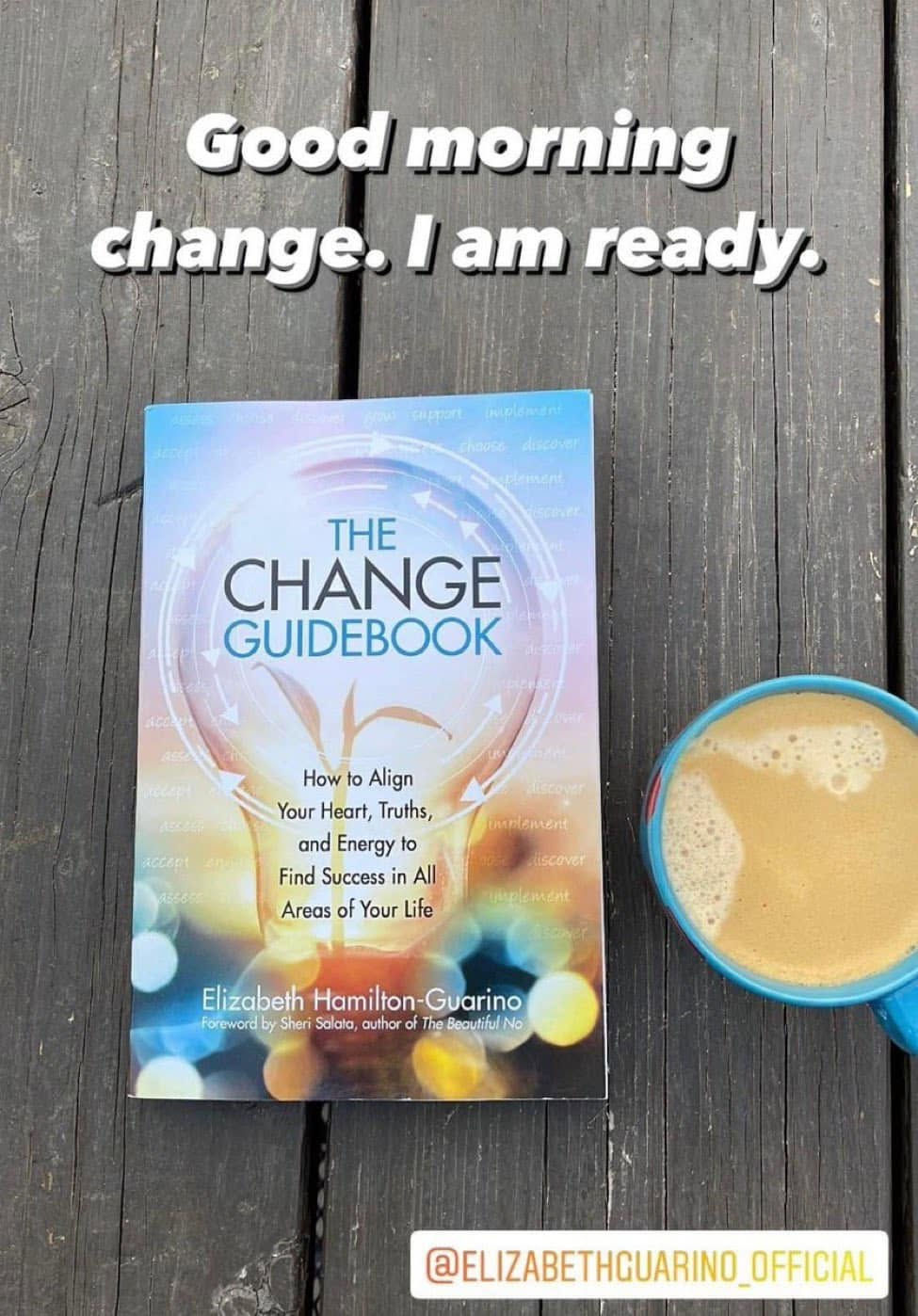
Elizabeth Hamilton-Guarino is a bestselling author, life coach, speaker, and founder of the Best Ever You® Network, which she created in 2008 to help people navigate change, define success for themselves, cultivate greater peace, and let their best selves filter through. She is the author of The Change Guidebook and The Success Guidebook and coauthor with Dr. Katie Eastman of The Peace Guidebook and the Hay House book Percolate: Let Your Best Self Filter Through.
Through her books, coaching, speaking, and The Best Ever You Show, Elizabeth has spent nearly two decades helping people recognize the patterns that keep them stuck, make meaningful changes, and create lives with greater peace, purpose, and possibility.
Learn more at BestEverYou.com and ElizabethGuarino.com.
When you grow, the world grows with you.

Comments