


Dr. Bradley Nelson Interview: Emotional Healing, Stress, and Trapped Emotions

In times of uncertainty, many people find themselves feeling overwhelmed, anxious, or emotionally drained without fully understanding why.

In this insightful conversation, Best Ever You Founder, Elizabeth Hamilton-Guarino sits down with renowned holistic physician and bestselling author Dr. Bradley Nelson to explore what is really happening beneath the surface of stress, fear, and emotional overload.
Together, they discuss the impact of “trapped emotions,” the toll of constant exposure to negative news, and simple, practical ways to begin restoring balance, clarity, and peace.
If you are looking for grounded, accessible tools to support your well-being and reconnect with a sense of calm, this conversation offers both insight and hope.
Many people are feeling heightened anxiety, fear, and emotional overwhelm right now. From your perspective, what is happening in the body and mind during times of global uncertainty?
During times of uncertainty, the body shifts into a heightened state of alert. This is part of our natural survival response, but when it becomes chronic, it creates an imbalance in our internal energy system. The mind begins to focus more on potential threats, and the body follows by activating stress responses like increased heart rate, shallow breathing, and muscle tension. This reaction is often amplified by unresolved emotional energy from the past — emotional baggage from difficult experiences we have faced in the past.
You’ve spoken about how constant exposure to news can dysregulate the nervous system. What are some of the signs that someone may be emotionally overloaded without even realizing it?
Emotional overload often shows up in subtle ways at first. People may notice difficulty concentrating, irritability, disrupted sleep, or a sense of heaviness they can’t quite explain. Others may feel numb or disconnected rather than anxious. Physically, the body may express this overload through fatigue, tension, or digestive issues. These are all signals that the nervous system has been pushed beyond its natural capacity to process stress.
How does “doomscrolling” impact our emotional and physical health over time?
Endless scrolling and repeated exposure to alarming headlines can keep the body in a stress response. Doomscrolling keeps the mind locked onto fear-based input, which continually signals the body that danger is present. This ongoing activation can weaken the immune system, strain the heart, and drain emotional energy. It also conditions us to expect trouble and danger, causing us to worry more and robbing us of the joy we should experience in life.
Your work centers around the idea of “trapped emotions.” Can you explain what that means in a way that someone new to your work can easily understand?
When you have an intensely difficult experience, the emotions you feel should fade with time. But sometimes they’re just too much for you to process, and your body holds onto that negative energy in the form of what we call trapped emotions. They can lead us to unconsciously choose certain feelings, thoughts, and expectations that compound rather than relieve our sense of stress.
Think of a trapped emotion as a ball of energy that becomes lodged somewhere in the body. Each trapped emotion carries a unique vibration from a specific moment in time, and no two are exactly alike. These trapped emotional energies often gravitate toward areas of weakness or imbalance — perhaps where there’s already injury, inflammation, or even a deficiency. For example, if you’re struggling to “stomach” a challenging situation, a trapped emotion may settle in your stomach, manifesting as discomfort or tension. Similarly, if you feel as though you’re “carrying the weight of the world” on your shoulders, you might find that a trapped emotion lodges in your neck or shoulders, contributing to physical strain and soreness. Our bodies have a remarkable way of reflecting our inner experiences, and trapped emotions often anchor themselves in places that mirror the emotional burden we’re carrying.
How do trapped emotions from the past influence how we respond to present-day stress, such as world events or personal challenges?
Trapped emotions color how you experience the world. A current situation may trigger an old emotional pattern, intensifying your reaction. For example, someone with trapped fear or insecurity may respond to uncertainty with heightened anxiety, even if the present situation doesn’t fully warrant that response. These patterns can create cycles that reinforce stress rather than resolve it, affecting us mentally, physically, and emotionally. In our experience, up to 90 percent of physical pain has an emotional root. Physical pain is one of the most common ways that trapped emotional energies will make their presence known.
Are there common emotional patterns you see showing up repeatedly in people during times of crisis?
When trapped emotions remain stuck in your energy field, they make it easier for you to re-experience the same emotion, even in unrelated situations. Over time, these recurring patterns of emotional reactivity can subtly alter your personality and behavior. For instance, someone with a trapped emotion of rejection might be hypersensitive to perceived slights, even when none are intended. Someone with a trapped emotion of fear might find themselves paralyzed in situations requiring confidence, as the emotional vibration subtly but continually reinforces a state of hesitation and self-doubt. Trapped emotions also shape how you view yourself and others. They can cause you to make assumptions, overreact, or misinterpret situations, leading to unnecessary conflicts that can directly impact your connections with others.
What are some simple, accessible ways someone can begin identifying and releasing emotional baggage on their own?
Start by paying attention to recurring emotional reactions, especially those that feel disproportionate to the situation. Techniques like muscle testing, which we use in The Emotion Code, can help identify trapped emotions by accessing the subconscious mind. Even without formal training, people can begin by asking themselves reflective questions and noticing how their body responds. Practices like journaling, mindfulness, and intentional breathing can also help bring hidden emotions into awareness.
For someone feeling overwhelmed right now, where is the best place to start without it feeling like “one more thing” to manage?
Something as simple as slowing your breathing can have a profound effect on your nervous system. Placing one hand on your heart and one on your abdomen, then breathing slowly and intentionally, helps signal to your body that you are safe. Then think about anything or anyone in your life that makes you feel grateful. Positive emotions such as love, gratitude, and joy promote healing and well-being. These emotions lift our vibrational frequency and create harmony within the body. When we are in a state of love or peace, our energy flows freely, leading to better emotional and physical balance.
How quickly can someone begin to feel a shift when they start working on releasing trapped emotions?
Many people notice changes very quickly, sometimes immediately after releasing a trapped emotion. They instantly feel lighter, calmer, or more at ease. For others, the process unfolds over time as layers of emotional energy are released.
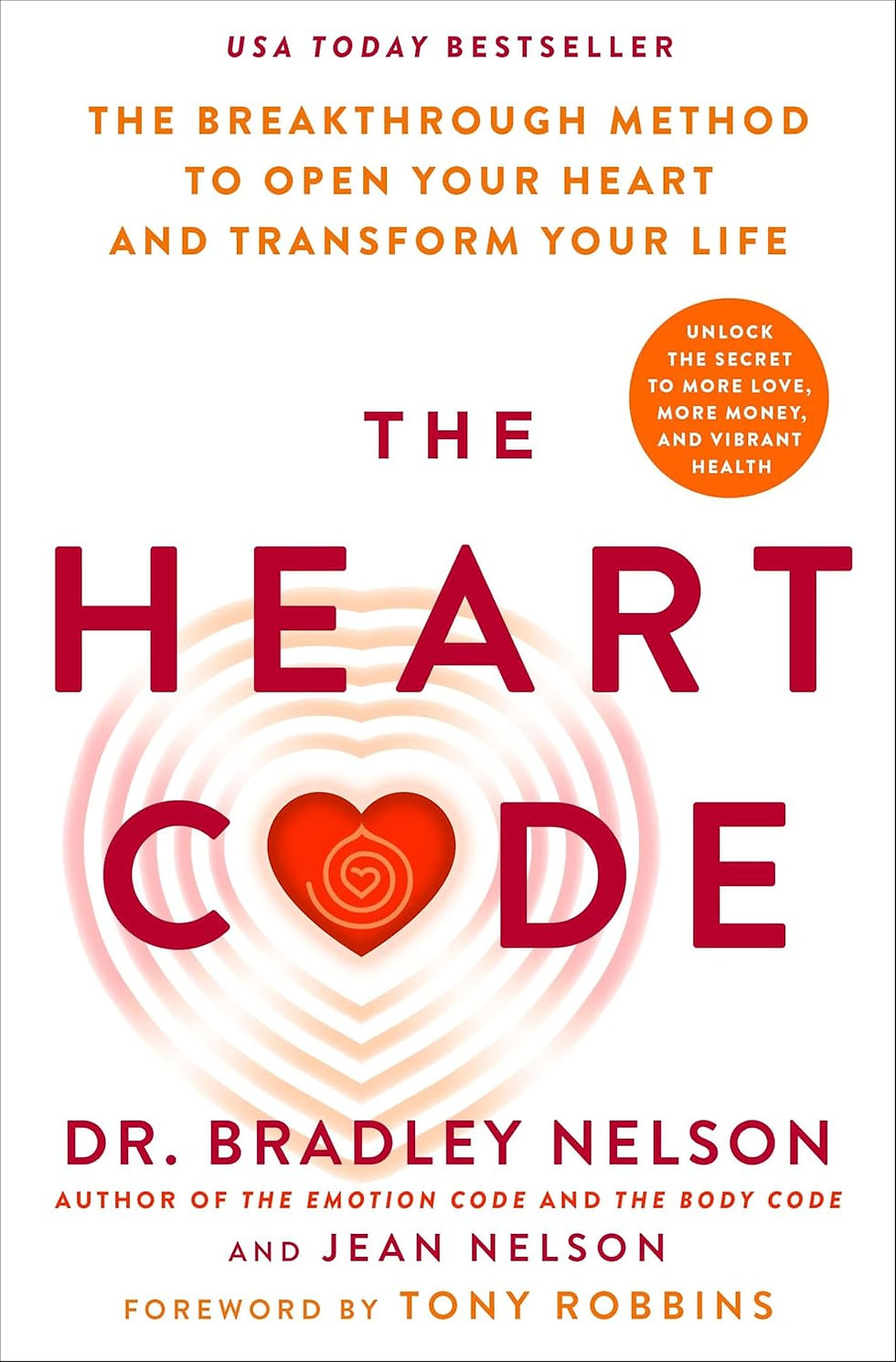
Your books The Emotion Code, The Body Code, and The Heart Code each explore different aspects of healing. How do they build on one another?
The Emotion Code introduces the foundational concept of trapped emotions and how to release them and gives people simple and powerful tools for emotional healing. The Body Code expands on that foundation by addressing a broader range of imbalances, including structural, nutritional, and energetic issues. The Heart Code goes deeper by focusing on the heart, particularly what we call the Heart-Wall. This is an energetic barrier made up of multiple trapped emotions, created by the subconscious mind to protect people from further pain during extremely traumatic and difficult events. Over time, a Heart-Wall can block people from fully giving and receiving love, leaving them disconnected, lonely, and sad.
What inspired you to write The Heart Code, and what makes it especially relevant for the world we’re living in today?
In the book, my wife and co-author Jean Nelson and I recount how we discovered she had a Heart-Wall, and how that discovery led us to realize many other people are living with these emotional barriers around their hearts, often without realizing it. Heart-Walls limit our ability to feel love, connection, and joy. In today’s world, where fear and division can feel overwhelming, reconnecting with the heart is more important than ever. When the heart is open, people experience greater compassion, resilience, and a deeper sense of peace.
If someone is brand new to your work, which book or concept would you recommend they begin with, and why?

“The Emotion Code” provides a clear and accessible introduction to the concept of trapped emotions and offers practical tools that people can begin using right away. If they suspect that they or someone they love has a Heart-Wall, they could also start with The Heart Code, as it also provides an introduction to trapped emotions, energy healing and Heart-Walls. It also contains many true stories of how people have come to experience healing in their hearts, bodies and relationships, and the sense of freedom, renewal and abundance that comes with releasing trapped emotions and Heart-Walls.
You talk about the importance of the heart in emotional and physical healing. What role does the heart play in helping people move from fear to a place of calm and hope?
The heart plays a central role in regulating our emotional state. A groundbreaking study published by the Institute of HeartMath revealed the significant role of the heart in influencing emotional processing in the brain. Researchers discovered that the heart continuously sends signals to the brain, and these signals have a direct impact on areas responsible for emotional regulation and decision-making. Both ancient wisdom traditions and modern science point to a profound truth: The heart is more than a physical organ. It is the seat of our emotions, a center of communication, and a key player in our health and relationships.
In your experience, what is the connection between emotional healing and overall well-being, including physical health?
Emotional healing is deeply connected to physical health. Trapped emotions can contribute to imbalances in the body, affecting everything from energy levels to organ function. When those emotional energies are released, the body often has a greater ability to heal and function as it was designed to.
For someone who feels stuck in worry or fear about the future, what is one message or piece of guidance you would want them to carry with them right now?

You have more control than you may realize. Even in uncertain times, you can choose where to place your focus and how to care for your internal state. Small, consistent actions, like breathing deeply, practicing gratitude, and releasing emotional baggage, can create meaningful shifts. Healing and peace are always possible, no matter what is happening around you.
We’d also love any additional thoughts you’d like to share with our audience about creating emotional balance, resilience, and hope in today’s world.
In a world that often feels scary and unpredictable, restoring emotional balance can make all the difference in how we experience life. When we take the time to understand and release trapped emotions and Heart-Walls, we open the door to greater resilience, clarity, calm, and abundance. Each person has the ability to reconnect with and strengthen the body’s natural healing power. Identifying and releasing trapped emotions and Heart-Walls creates space for emotional clarity, spiritual alignment, and deeper connections with others. This work can be transformative, unlocking the potential for a life filled with harmony, balance, and a profound sense of well-being.
Thank you to Dr. Bradley Nelson for sharing his wisdom, tools, and perspective on emotional healing and well-being. If this conversation resonated with you, take a moment to pause, breathe, and reflect on one small step you can take today to support your emotional balance.
About Dr. Bradley Nelson
Renowned holistic physician and USA Today Bestselling Author Dr. Bradley Nelson is one of the world’s foremost experts on natural methods of achieving wellness. A visionary thought leader in root cause healing and personal transformation, he is the creator of The Emotion Code®, The Body Code®, and The Belief Code®, and CEO of Discover Healing. His bestselling books include The Emotion Code, The Body Code and his newest book, The Heart Code, co-authored with his wife Jean Nelson. "The Heart Code" is now available with special gifts at drbradleynelson.com.


Comments